Omaze Subprizing
.png)
About Omaze
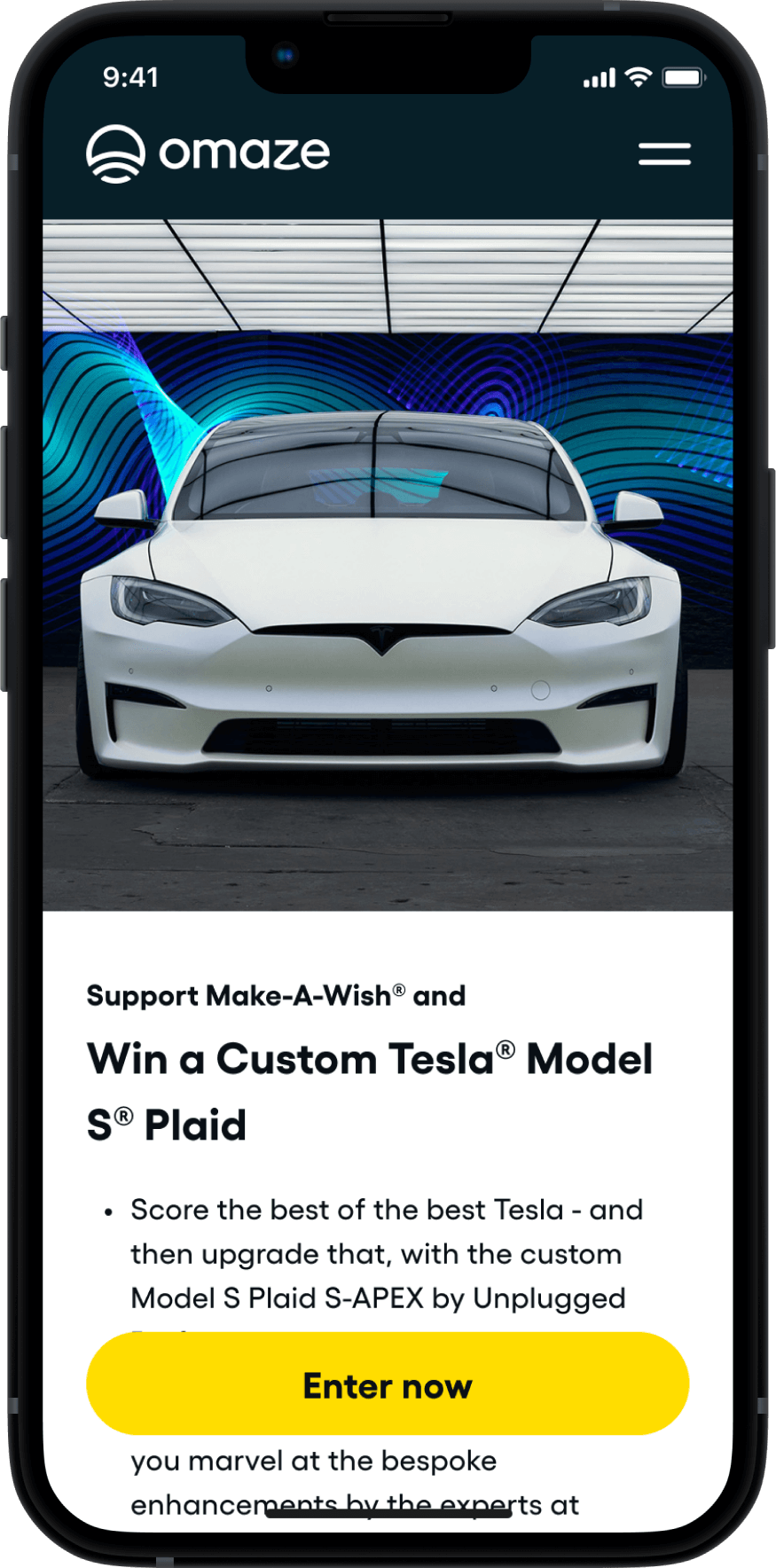
Omaze is a charitable fundraising startup that raises money by offering people the chance to win life-changing prizes like cars and houses.
Role
Product Designer
July - September 2022
Responsibilities
Design subprizing feature as part of Omaze’s sweepstakes model
Plan, conduct, and analyze user testing feedback from Usertesting.com
01 - Context
How does subprizing work?
Omaze Subprizing is a prizing model that offers additional prizes to the grand prize sweepstake. When a customer enters to win a sweepstake, they are automatically entered to win the additional subprizes. Customers are eligible to win the grand prize in addition to any and all of the subprizes.
Constraints
Additional Context
We will have a grand prize associated with the subprizes.
Our sweepstakes will have a lifecycle of one month.
To start, our subprizes will be cash (or gift cards).
The total cost of our subprizes will be no more than ~10% the cost of the grand prize.
We are designing initially for mobile because over 80% of our user traffic comes from mobile devices.
This feature will be released internally to Omaze employees for initial feedback before being released in the MVP relaunch of our Dotcom site.
02 - problem space

Our sweepstake model offers customers a chance to donate to charity and win. However, some returning customers feel they won't win, and new visitors are hesitant for the same reason.


By offering subprizes in addition to the grand prize, users are more likely to participate in our sweepstakes because they are given more opportunities to win, and we will see an increase in our conversion (the percentage of visits to the website that result in at least one order) rate.
03 - Research
Starting a series of research and testing.
I began a 4 test research phase using UserTesting.com — taking a Rapid Iterative Testing and Evaluation approach. In my first test, I wanted to better understand general motivations for entering a sweepstake. So, I created a simple A/B test using our existing product page with one version including a subprizing section to determine what kind of things might motivate our customers to participate in our sweepstakes.
Version WITHOUT subprizing information.
Version WITH subprizing information.
Customers need to believe they can win something.

Bonus entries (or other forms of higher chances of winning) increases the likelihood of entering.

People with lower incomes prefer more chances to win small prizes, while those with higher incomes prefer fewer chances at bigger prizes.

Offering exclusive subprizes on a weekly basis increases the likelihood of customers entering a single grand prize sweepstake more than once.
04 - First look into subprizing concepts
An introduction to the beginning of subprizing.
Increasing discoverability.
To introduce customers to subprizing, I added a sticky banner that allows for discoverability of the offer.
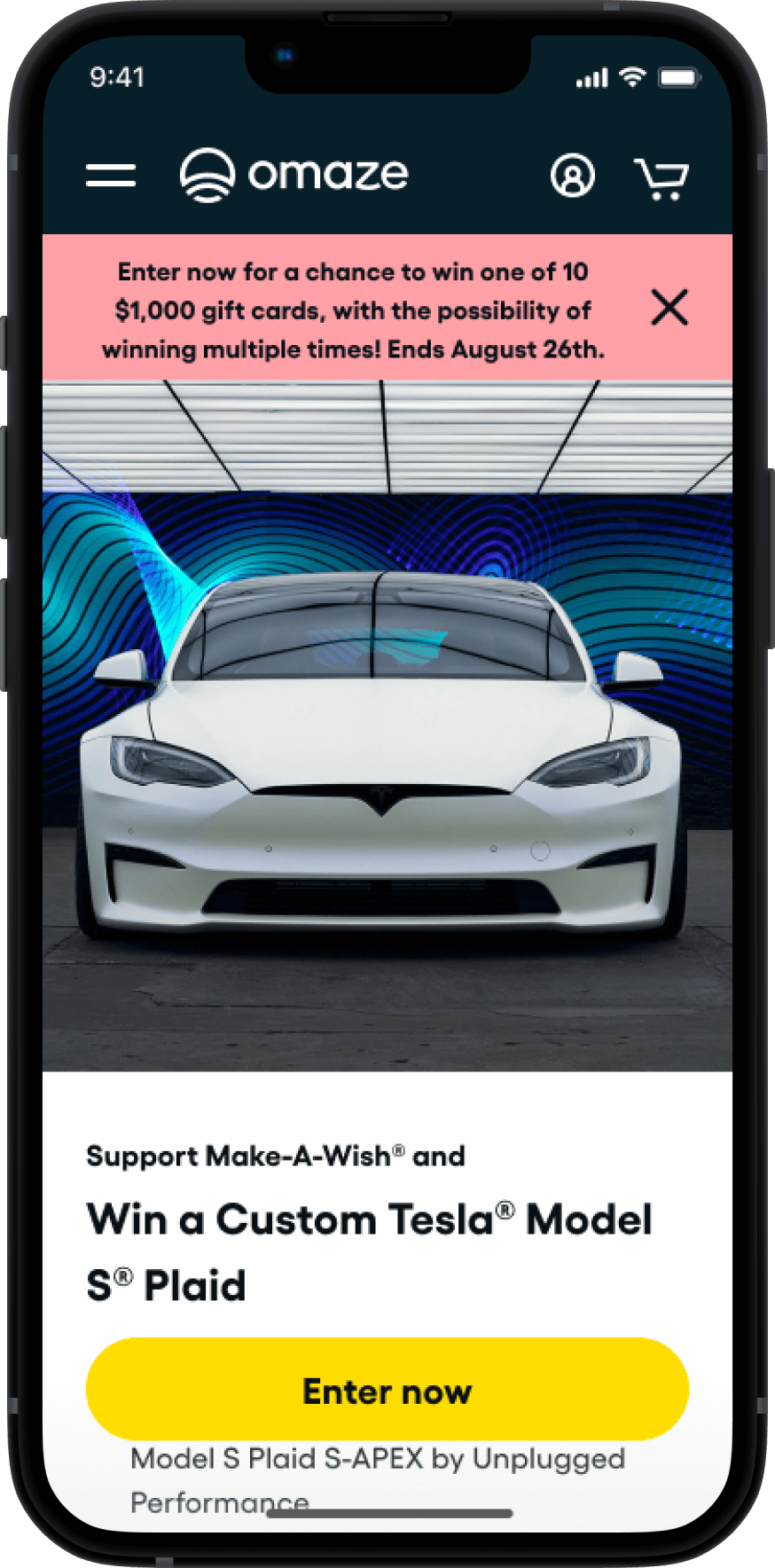
Added sticky banner.
Highlighting the benefits of the wonderful world of subprizing.
Using the designs from the first test as a starting point, I incorporated some findings for the subprizing section:
Participants initially weren't drawn to this section, so I adjusted the hierarchy towards the title and made the title copy more specific.
Participants felt the body copy regarding bonus entries wasn't clear because they felt they had to redeem the bonus entries somewhere, so I updated the copy to clarify that all they need to do is enter the sweepstake.
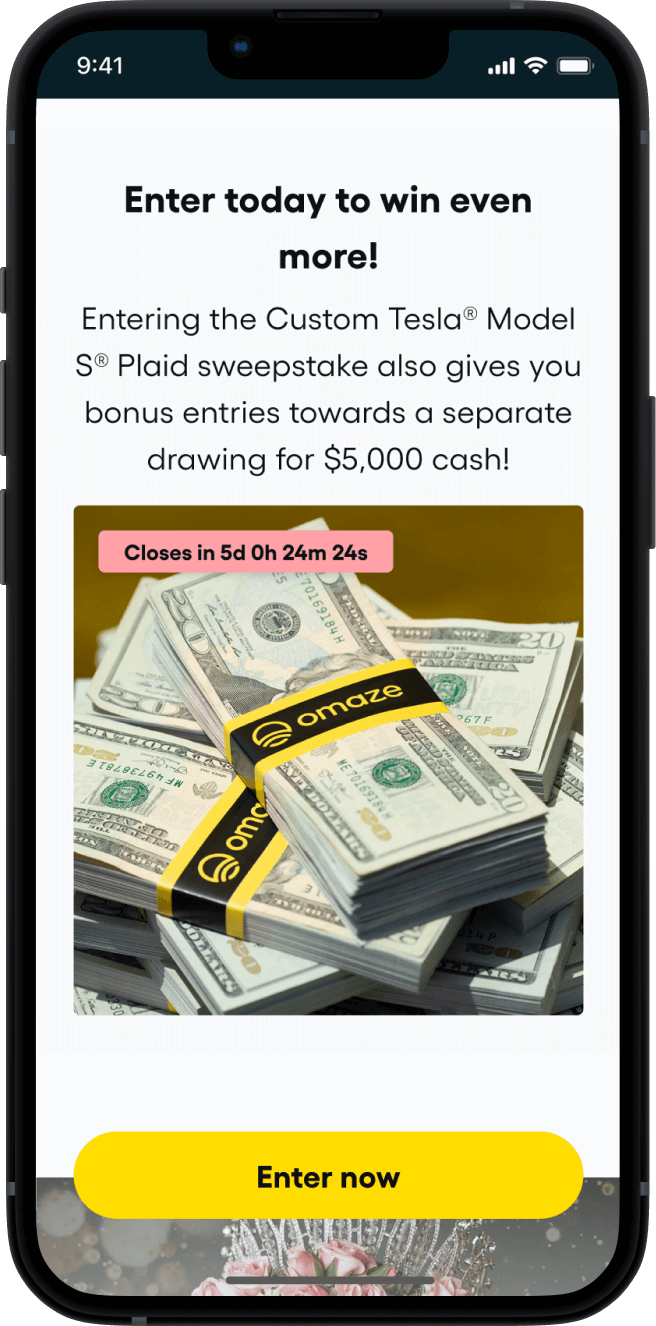
Subprizing Section - Before
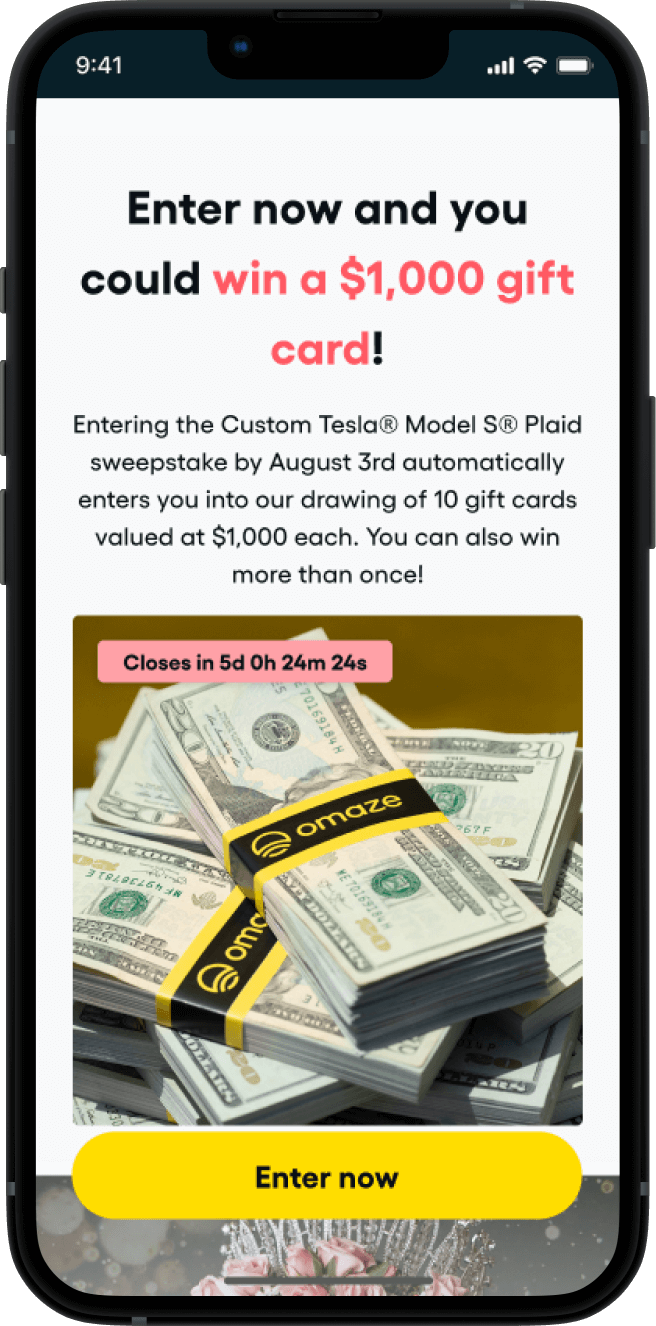
Subprizing Section - After
Updating our Legal team regarding subprizing.
After updating our legal team with the details of our subprizing plan, they informed us we needed to include information about subprizing in our sweepstake details section, which reads “We are also giving away 10 gift cards valued at $1,000 each every Friday at 5pm PST!”
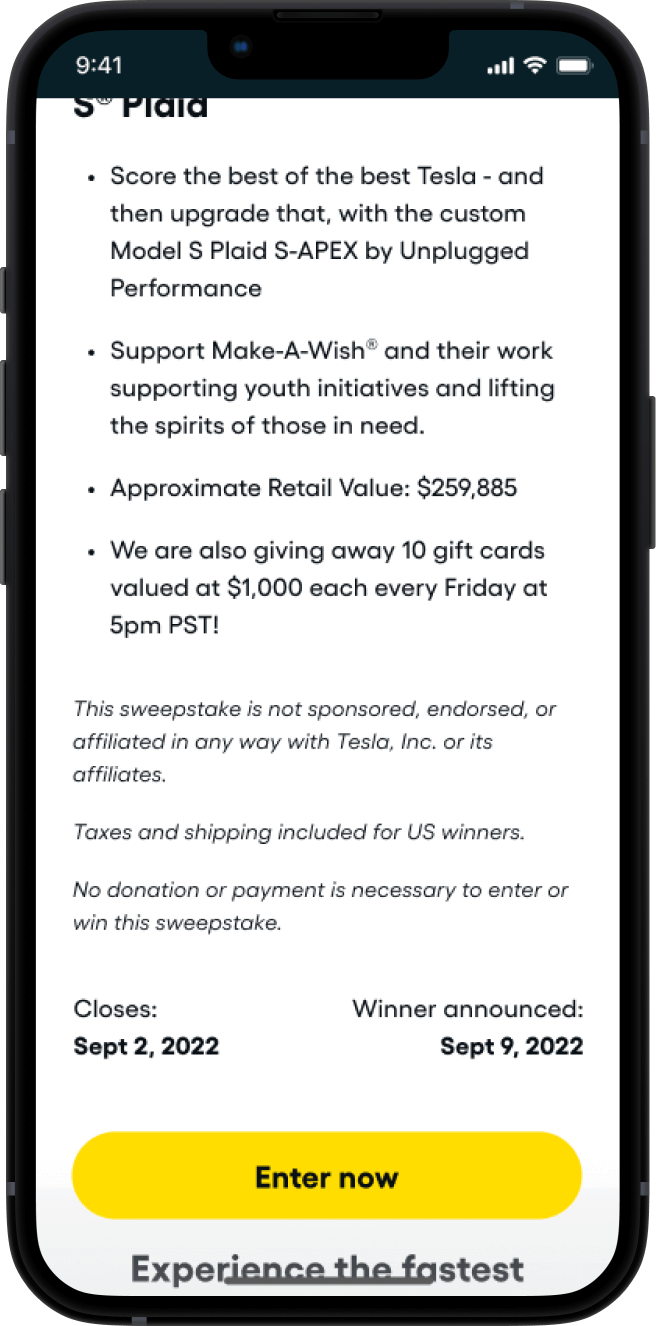
Updated sweepstake details.
05 - Subprizing Iterations
Confusion with the subprizing timeline.
To enhance clarity, I added a Sweepstake Timeline with all key deadlines, addressing confusion caused by displaying only Close and Winner Announced dates initially.
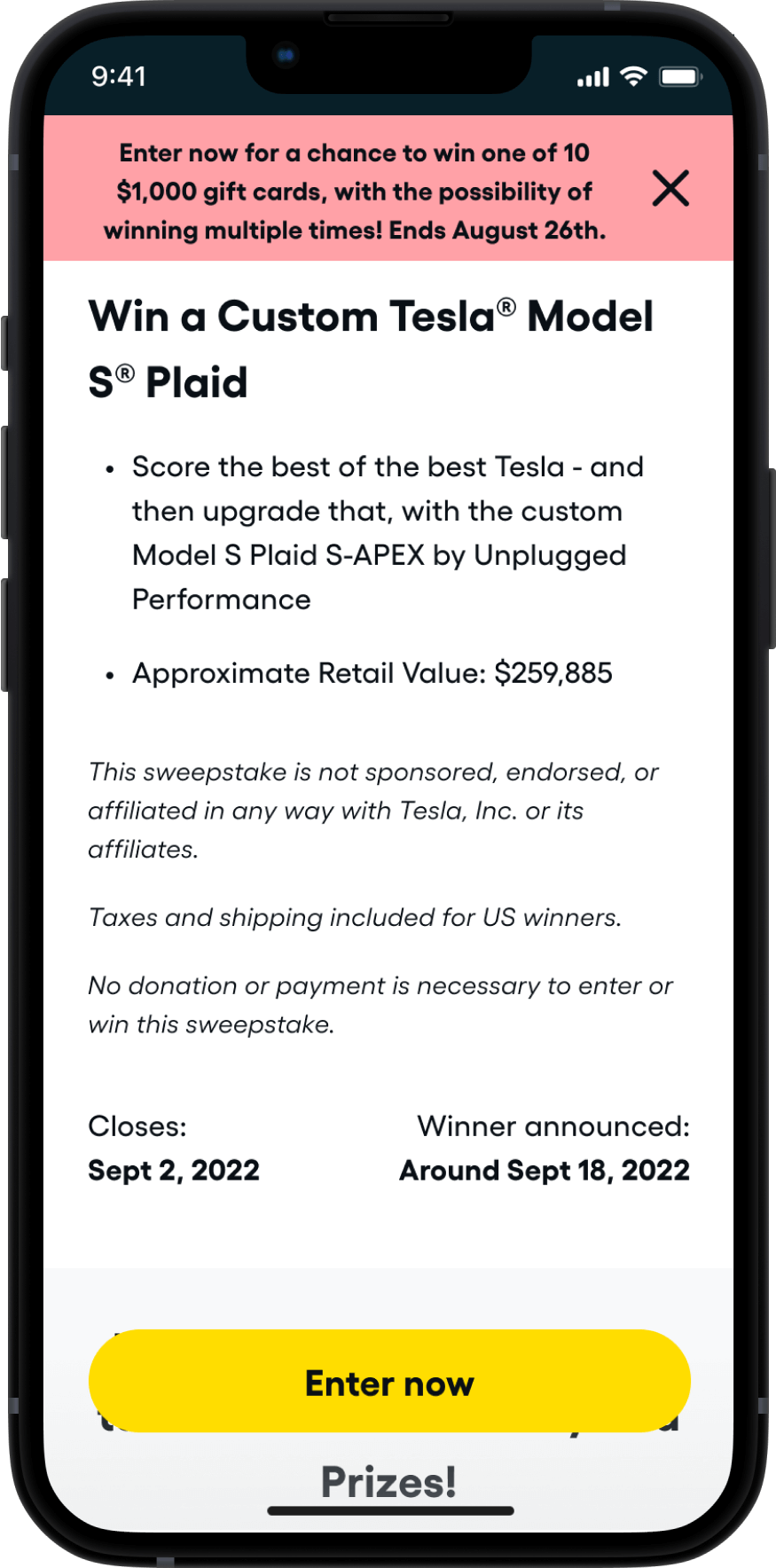
Sweepstakes Timeline - Before
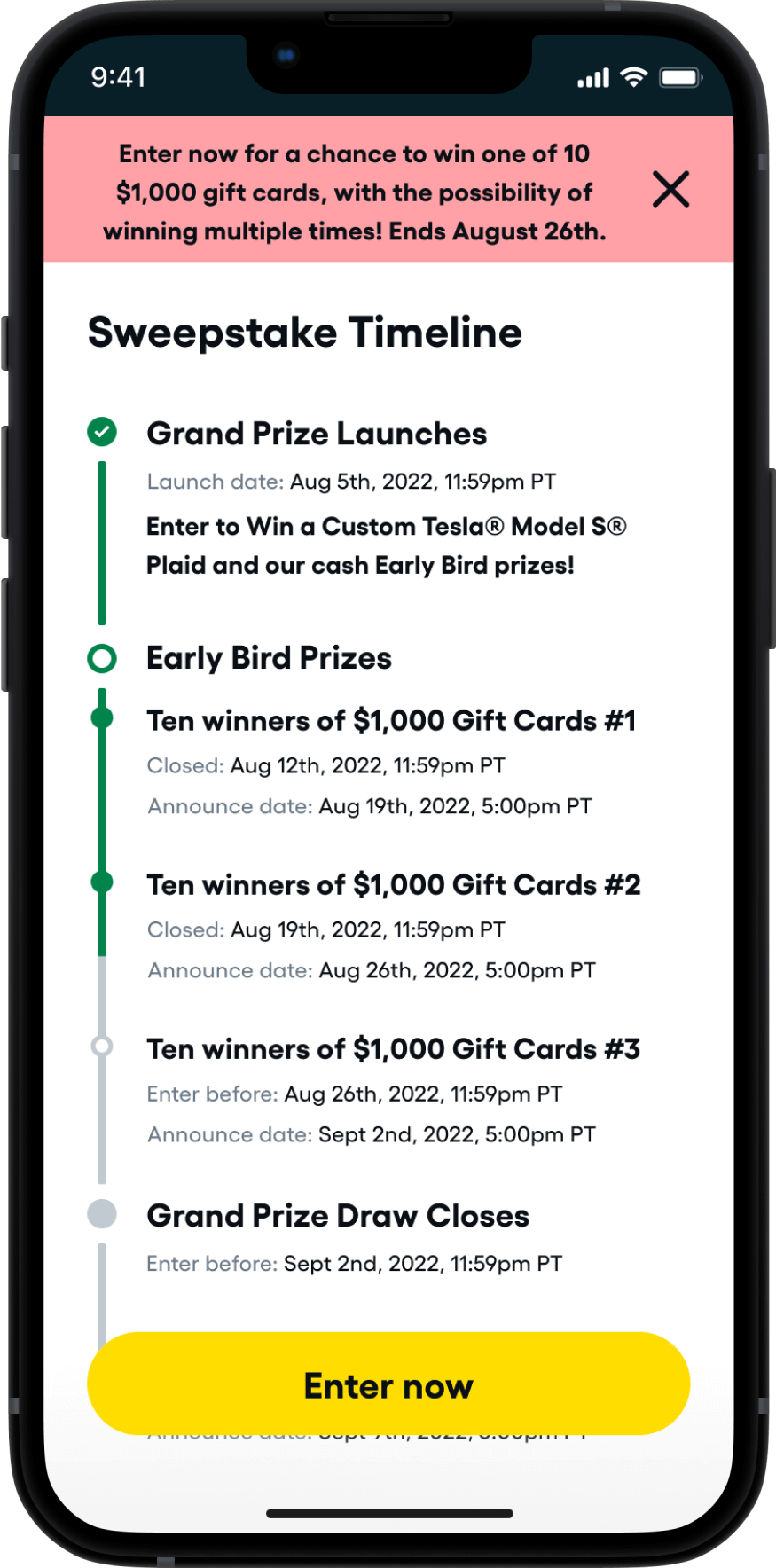
Sweepstakes Timeline - After
Unclear number of entries for the subprizes.
To clarify Subprize entry counts and boost participation, I displayed Subprize entry info on the Product Page, addressing user confusion.
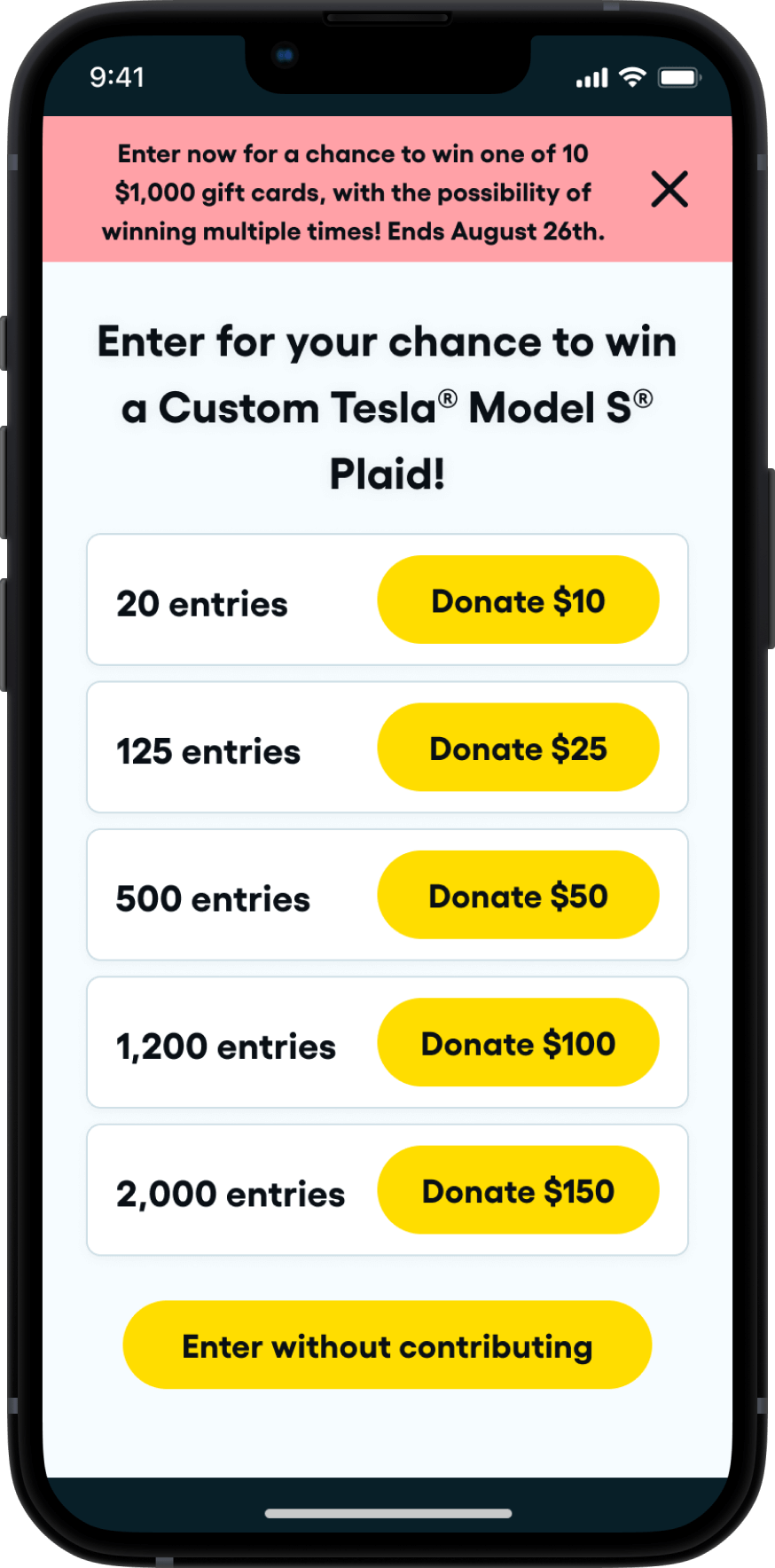
Donation Variants - Before
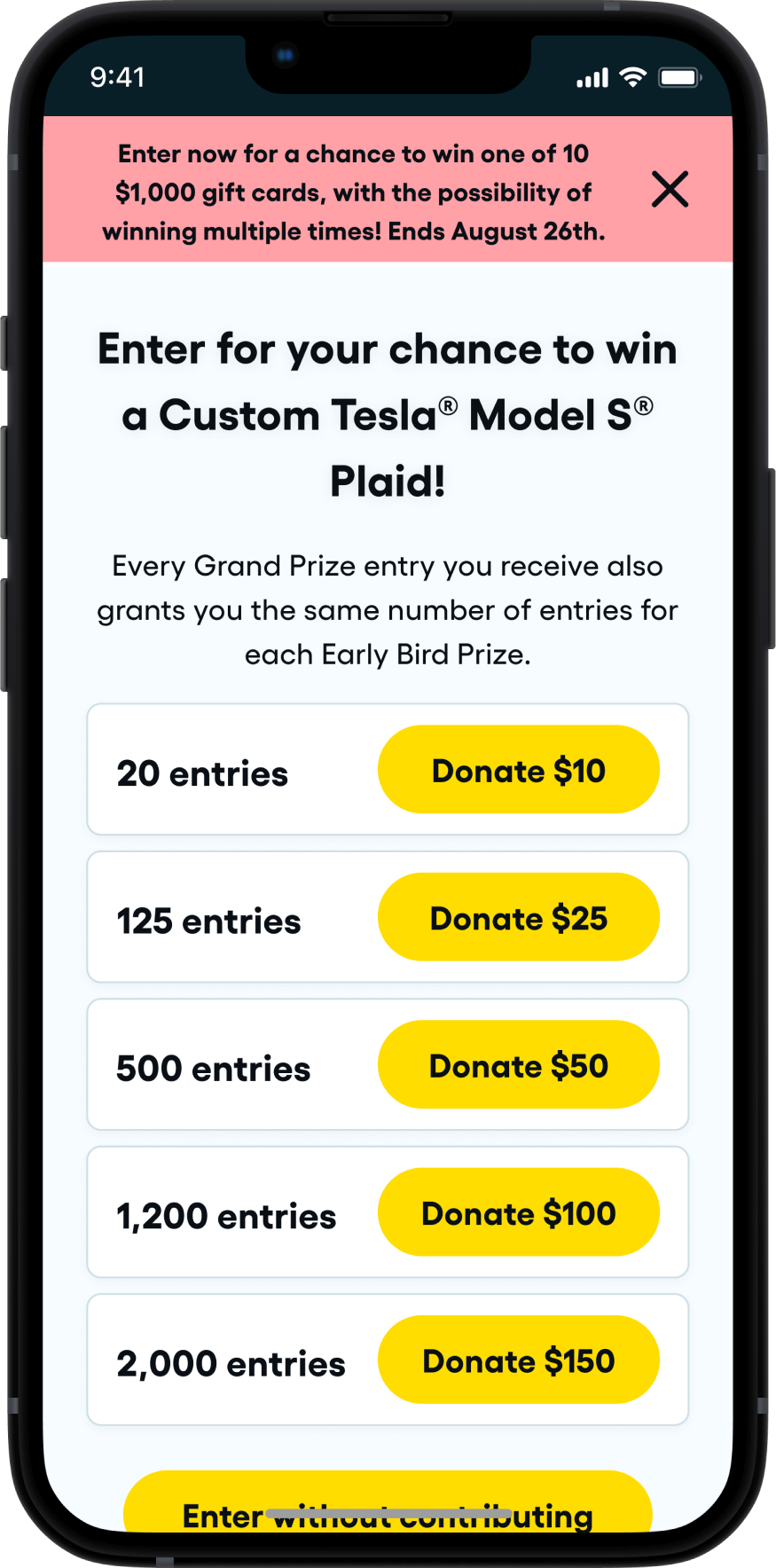
Donation Variants - After
Additionally, on the Cart Page I separated Grand Prize entries from Subprize entries, calling more attention to Subprizes.
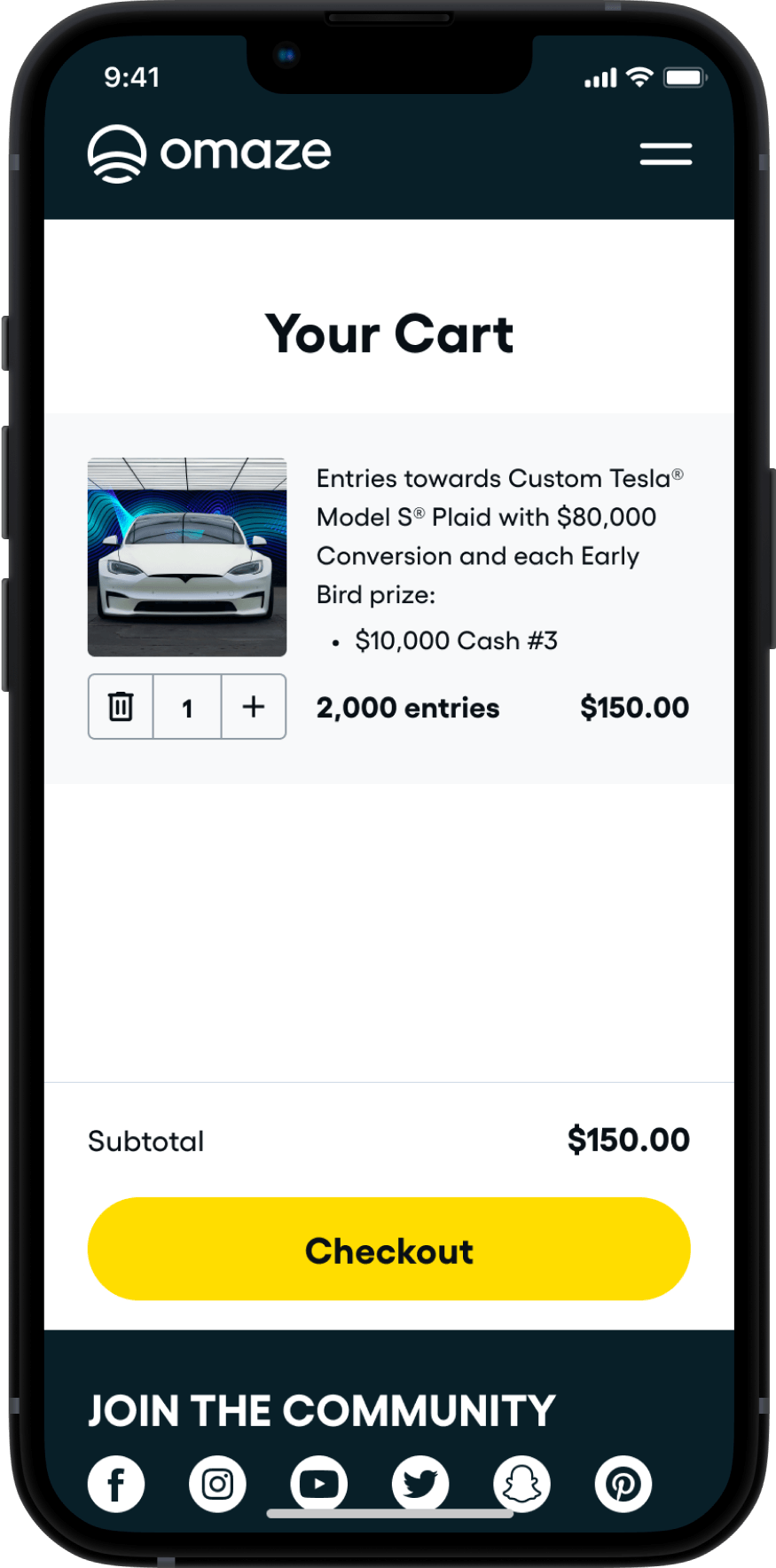
Cart - Before
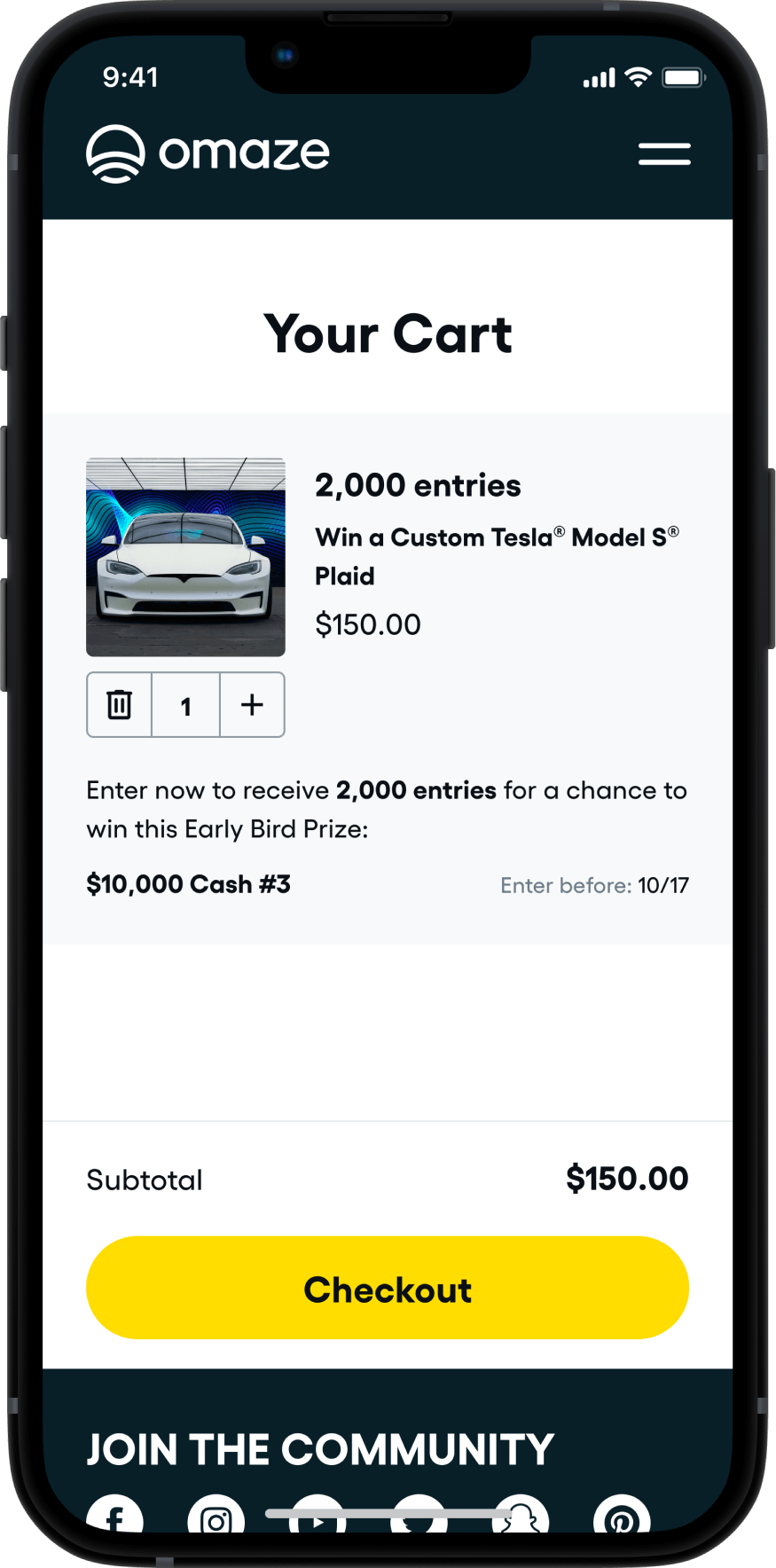
Cart - After
I just completed an order. Now what?
To ease customer uncertainty post-purchase, I added a call-to-action for guest sign-up, and for logged-in users, a view Order Details option. I also included a cross-sell card for more sweepstakes access.
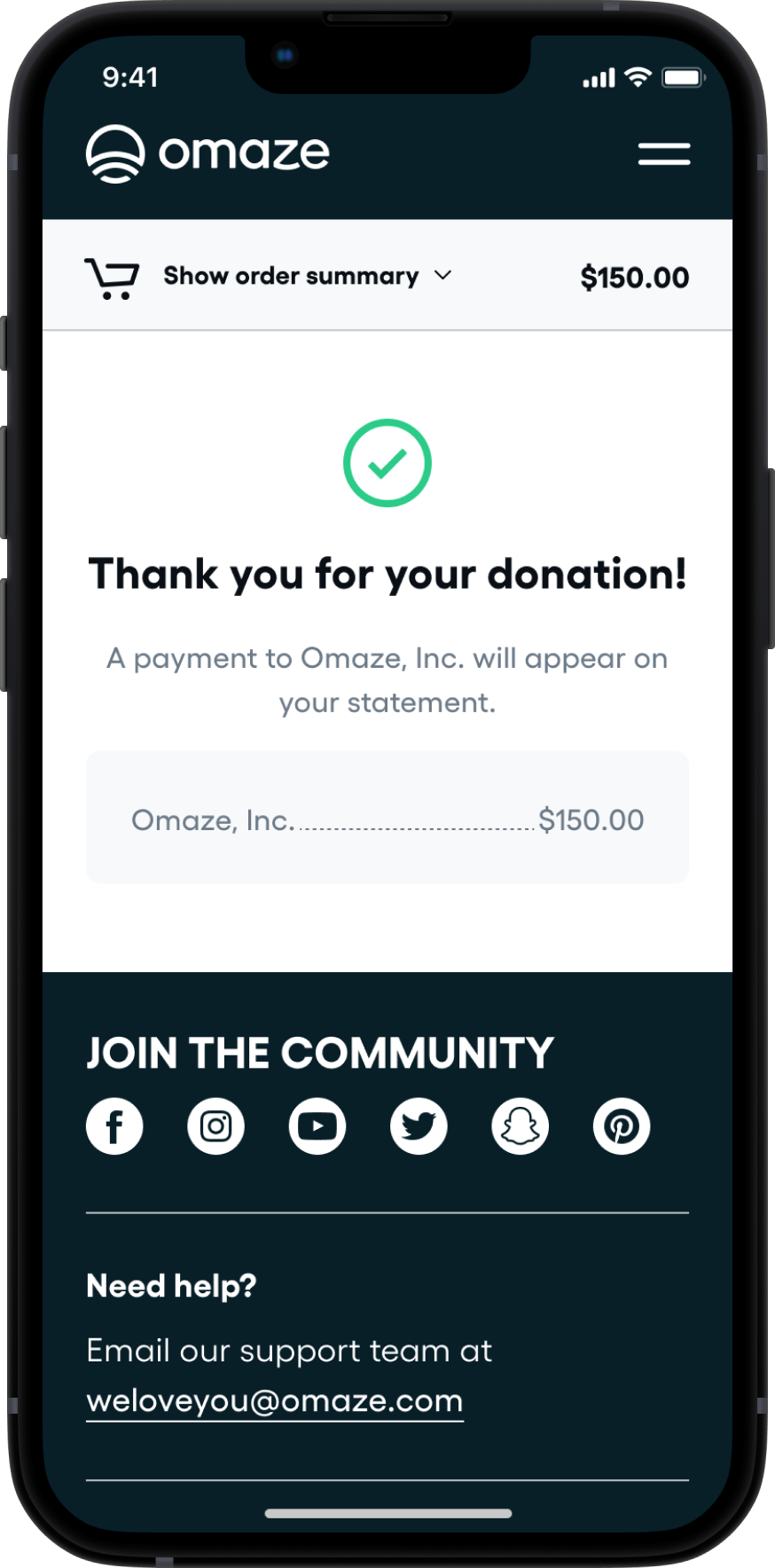
Order Confirmation - Before
Order Confirmation - After
05 - conclusion
Outcomes & Next Steps
After completing UserTesting.com iterations, I collaborated with our software engineering team. I shared annotated Figma documents for development and tested the feature internally with Omaze employees before its MVP relaunch.
After using UserTesting.com for qualitative feedback and an internal Omaze employee release, I'm eager to assess the impact on our quantitative business metrics once the feature is part of the MVP relaunch. I believe conducting A/B tests to compare designs would help us determine if these changes benefit both our business and customers.